
meteor shower
Phase Fiasco
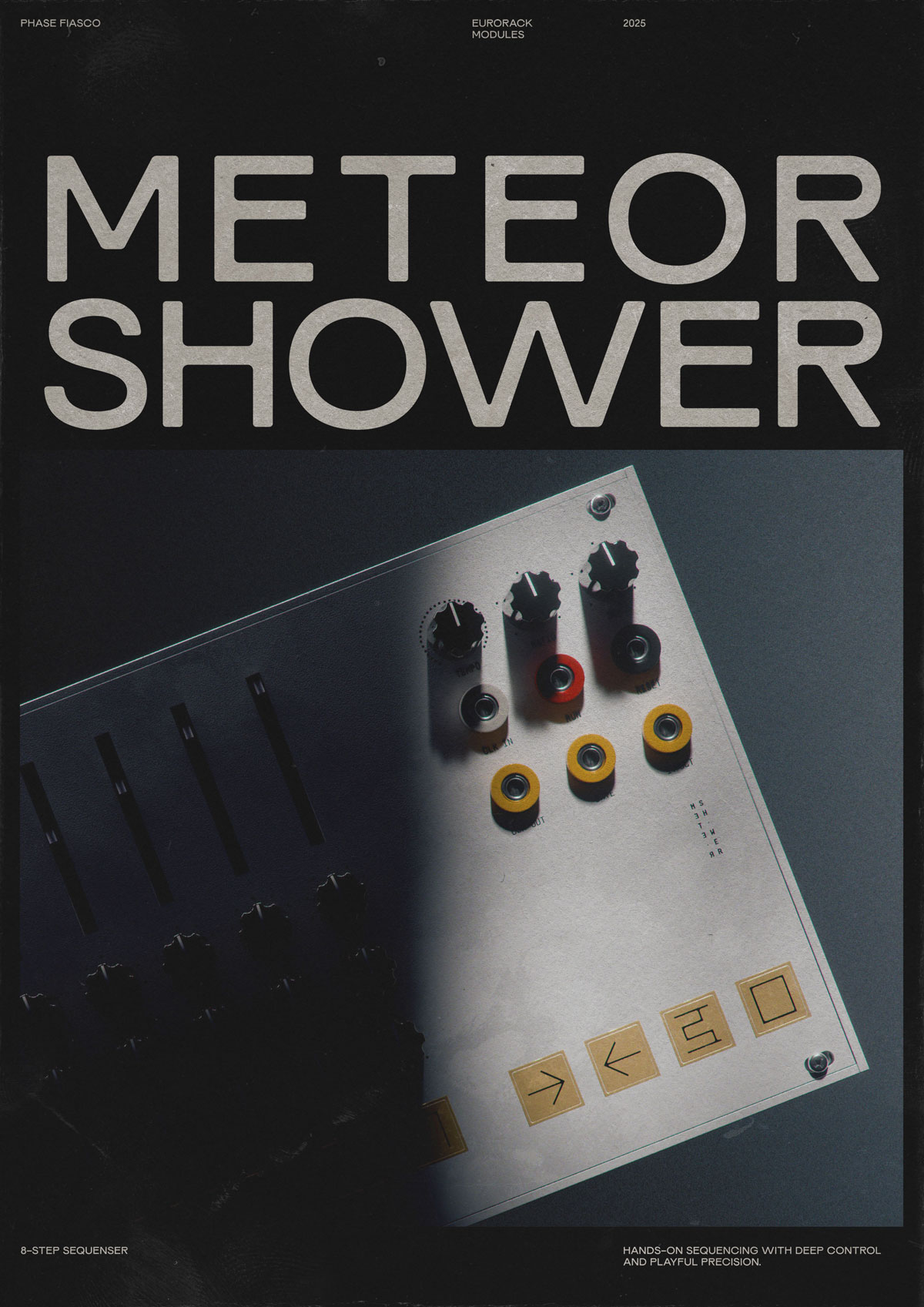
Hands-on sequencing with deep control and playful precision.
meteor shower
Meteor showers are astronomical events during which numerous meteors become visible as Earth passes through a stream of cosmic debris. These meteors are caused by small particles, often no larger than grains of sand, entering Earth's atmosphere at very high velocities, typically between 11 and 72 kilometers per second. As they collide with atmospheric molecules, the resulting friction heats them up, causing them to glow brightly and produce the visible streaks of light commonly known as "shooting stars." Despite the name, these meteors are unrelated to actual stars.
Meteors within a shower appear to originate from a specific point in the night sky, known as the radiant. This effect is caused by perspective. Although the meteoroids are traveling in nearly parallel paths, they appear to diverge from a single location due to the observer's viewpoint on Earth. Meteor showers are typically named after the constellation in which this radiant is located. For example, the Perseids have a radiant in the constellation Perseus, and the Geminids appear to radiate from Gemini.
Meteor showers occur at consistent times each year because Earth encounters the same streams of debris at fixed points in its orbit around the Sun. These debris streams are remnants of comets or, in some cases, asteroids that have left behind particulate trails during their passages through the inner solar system. As Earth intersects these trails, particles from the parent body enter the atmosphere and produce the meteor shower. Well-known showers like the Perseids in mid-August and the Geminids in mid-December are particularly active and have been observed and recorded for centuries.
The majority of meteor showers originate from comets, which are icy bodies composed of rock, dust, and frozen gases. When a comet approaches the Sun, it begins to sublimate, releasing material that becomes distributed along its orbital path. Over time, this material forms a meteoroid stream. When Earth crosses one of these streams, a meteor shower becomes visible. Some showers, such as the Geminids, are associated with asteroids. A notable example is asteroid 3200 Phaethon, which behaves somewhat like a comet and may be a "rock comet" or a fragment of a previously active body. The exact nature of such parent objects remains an active area of research.
Most meteoroids are too small to survive their fiery passage through the atmosphere and are entirely vaporized at altitudes ranging from 80 to 120 kilometers. However, in rare cases, larger fragments may endure the intense heat and pressure, reaching the ground as meteorites. Such events are uncommon during typical meteor showers, since the particles involved are generally small and fragile.
Meteor showers have long fascinated humanity. In antiquity, they were often interpreted as omens or supernatural signs. Today, they are appreciated both for their visual spectacle and their scientific value. By studying meteor showers and the composition of meteoroids, astronomers gain insights into the nature of comets, asteroids, and the early solar system. Observing a meteor shower is also a vivid reminder of Earth's motion through space and its ongoing interaction with the broader solar environment. Even with a full understanding of the physics involved, the sight of meteors tracing brilliant paths across the night sky continues to evoke a sense of wonder and curiosity.


Core Features
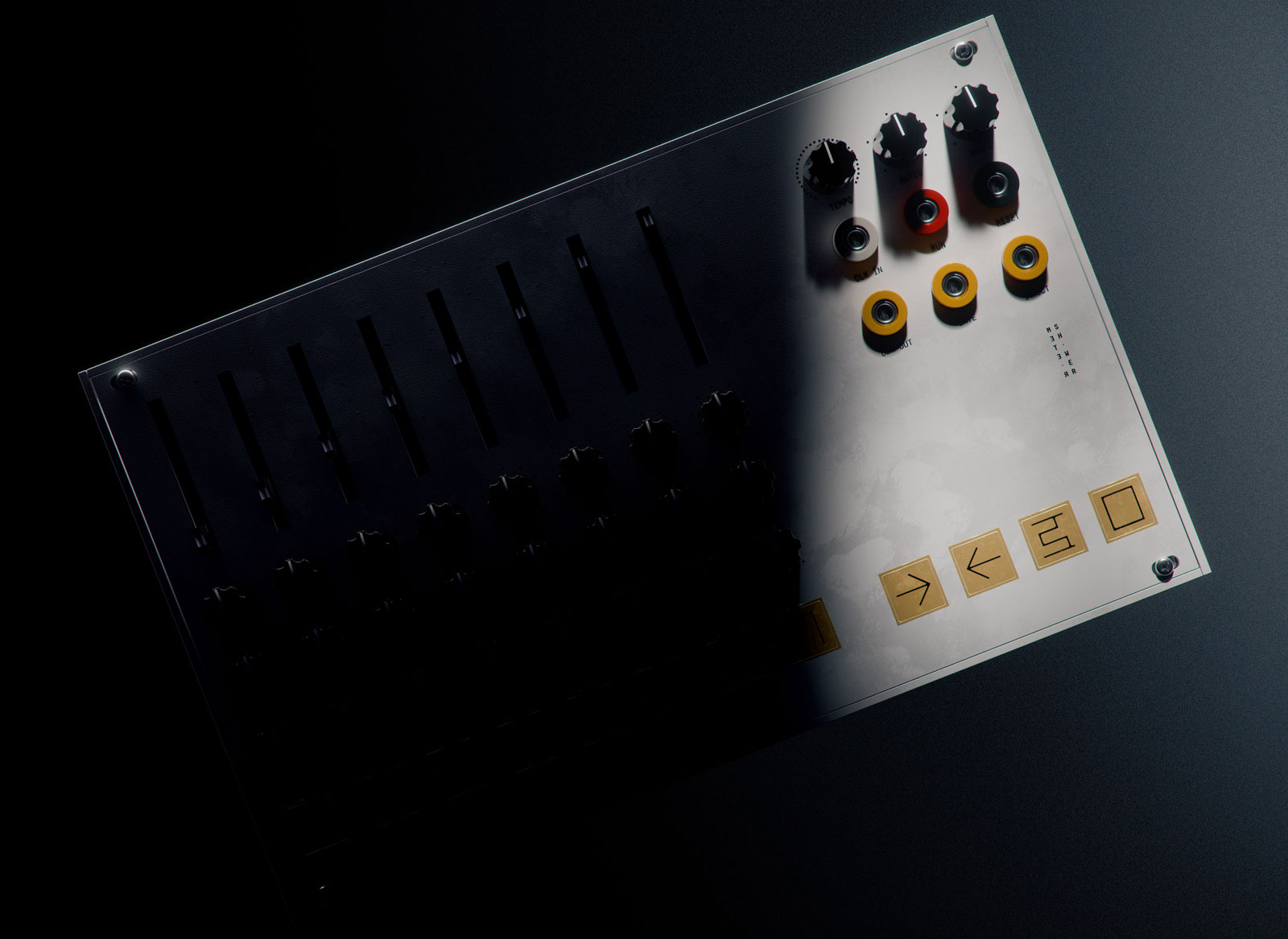
8-Step Sequencer - Up to 64 Steps
Sequences with variable step counts and lengths.
Dynamic performance and composition possibilities.
Controlled Pitch with Random Mode
Pitch 3 octaves.
Random functionality forendless generative melodies.
Step Length and Gate Count
Step length per step.
Allowing slow, stretched or rapid-fire sequences.
Slew Per Step
Slew time adjustable from 0ms (snappy) to full step duration (glide heaven)
Touch Control
Step trigger
Stopped: Trigger step manually.
Running: Jump to step.
Transport
Forward / Backward / Random / Stop
Performance controls
Tempo
40–320 BPM
Time Scale
Multiply or divide global speed .25x / .5x / 1x / 2x / 4x
Quantization
Chromatic / Major / Major Pentatonic / Minor / Minor Pentatonic
Patching
Input
Clock / Run / Reset
Output
Clock / Gate / 1V/OCT
Tech Specs
HP
42
Depth
30mm
Power Consumption
+12V=58mA, -12V=60mA, +5V=0mA