Phase Fiasco
Six worlds. One instrument.
Anomalia
Antron
Donisis
Morphosis
Bathmos
annulus
Six worlds. One instrument.
Annulus is a polyphonic resonator and effects engine built for sound designers who think in texture, not presets. At its heart is a faithful implementation of the physical modeling engine behind Mutable Instruments' Rings — one of the most celebrated modules in the history of Eurorack — paired with a full effects chain and a visual interface that breathes with the sound.
Six modes. Six physical models. Six complete sonic identities.
Download
MacOS (Silicon/Intel)
VST3 / AU
Windows
VST3
Disclaimer
Please note: Annulus is offered free of charge and is currently untested in the wild. It has not gone through a public beta or formal testing phase, so it may contain bugs or behave unpredictably across different systems and DAWs. Use it at your own discretion. If you hit any issues, I'd really appreciate a bug report sent to info@erikssonjonas.com, ideally with your OS, DAW, and a short description of what happened. Your feedback directly shapes where this goes next.
Morphosis
Bathmos
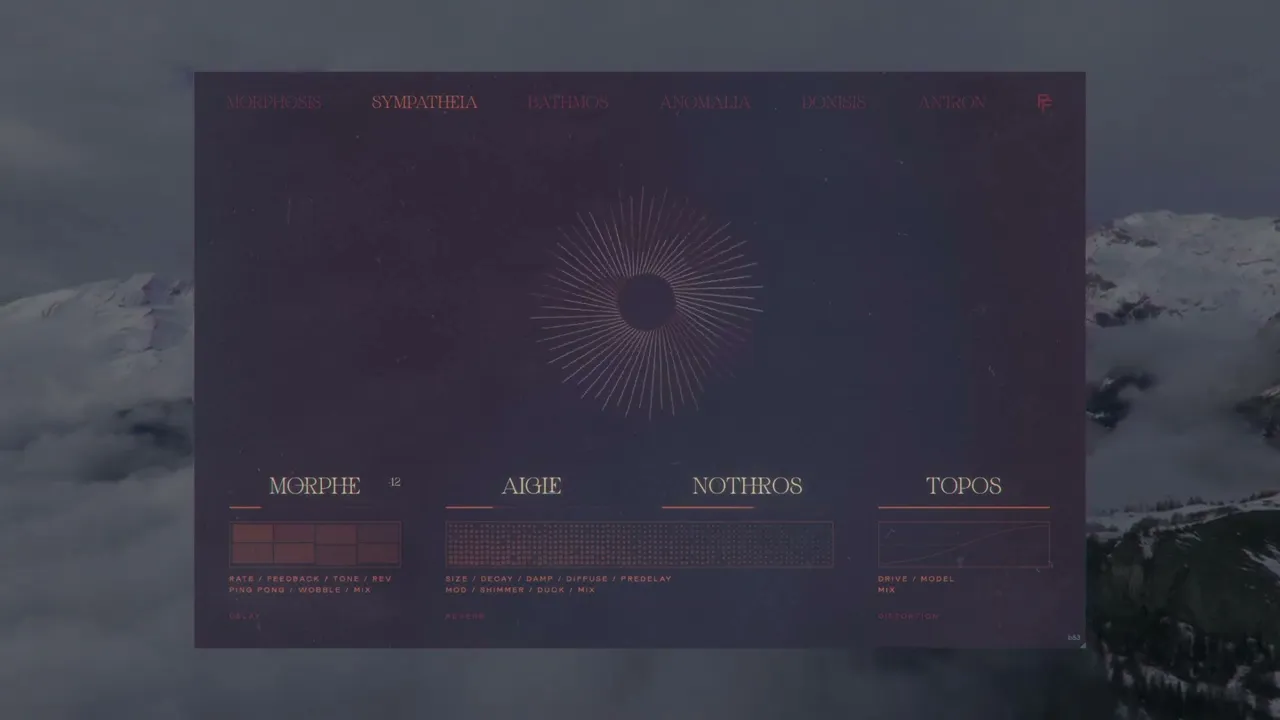
Sympatheia
001
The engine
Annulus routes your signal through four linked processors:
Rings: a MIDI-driven polyphonic resonator based on Mutable Instruments' Rings, running six distinct physical modeling algorithms. Eight voices spread across the stereo field with velocity and position randomization for organic variation on every hit.
Spiral: a stereo tape delay with tempo sync, ping-pong routing, wobble modulation, and saturated feedback.
Velvet: an algorithmic reverb (CloudSeed) with shimmer, diffusion, ducking, and a four-second tail.
Distortion: twelve waveshaping models at 2× oversampling, from soft tube warmth to asymmetric fuzz.
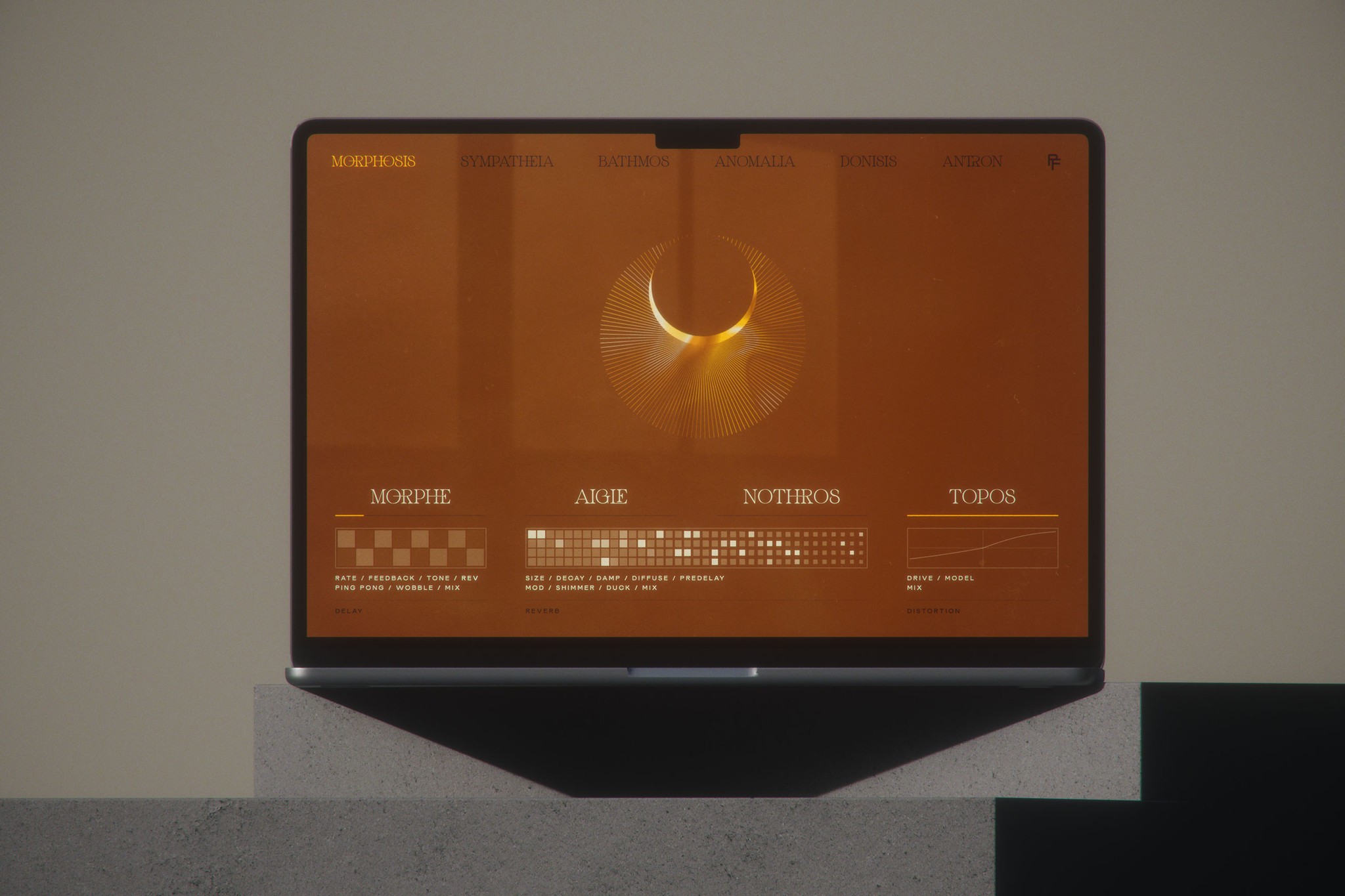
Four macro knobs: Morphe, Aigle, Nothros, Topos. Reach across the entire chain simultaneously. One gesture shapes the resonator, the delay, the reverb, and the drive at once. Topos also integrates into the visualizer's rotation, tying the image to the physics of the sound.
002
Morphosis
Modal resonator — the original Rings algorithm
The filter bank that made Rings famous. Morphe adjusts the stiffness and spacing of modal partials, moving from tight harmonic clusters into rich inharmonic shimmer while the fundamental stays anchored. The classic starting point.
003
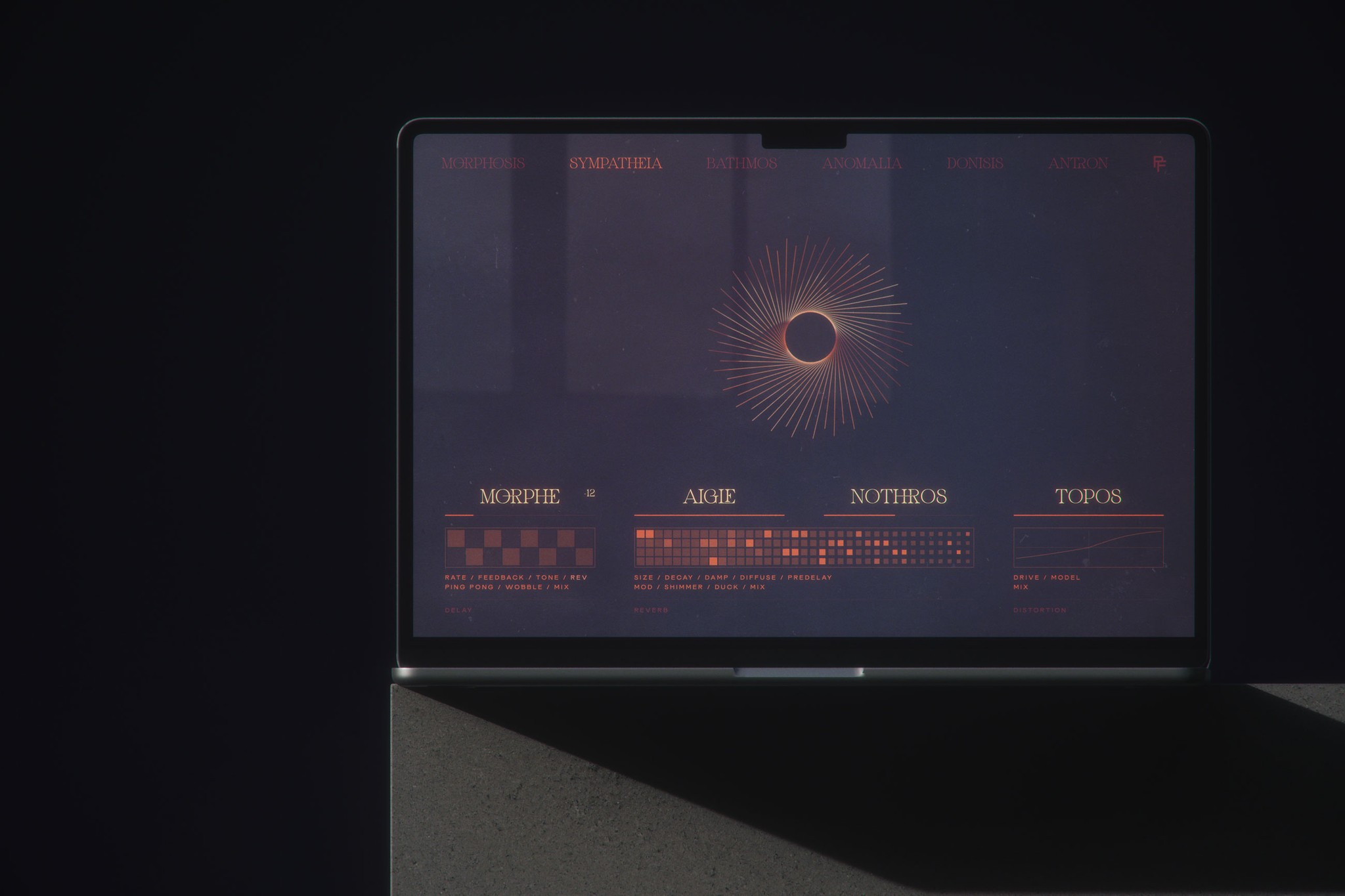
Sympatheia
Sympathetic strings — ensemble in a box
Six virtual strings that retune themselves in response to incoming pitch, producing the swelling unison and shimmer effect of a sympathetic string instrument. Morphe sweeps the interval relationships; Aigle controls how quickly the strings glide into tune, from instant to languid and out-of-focus.
004
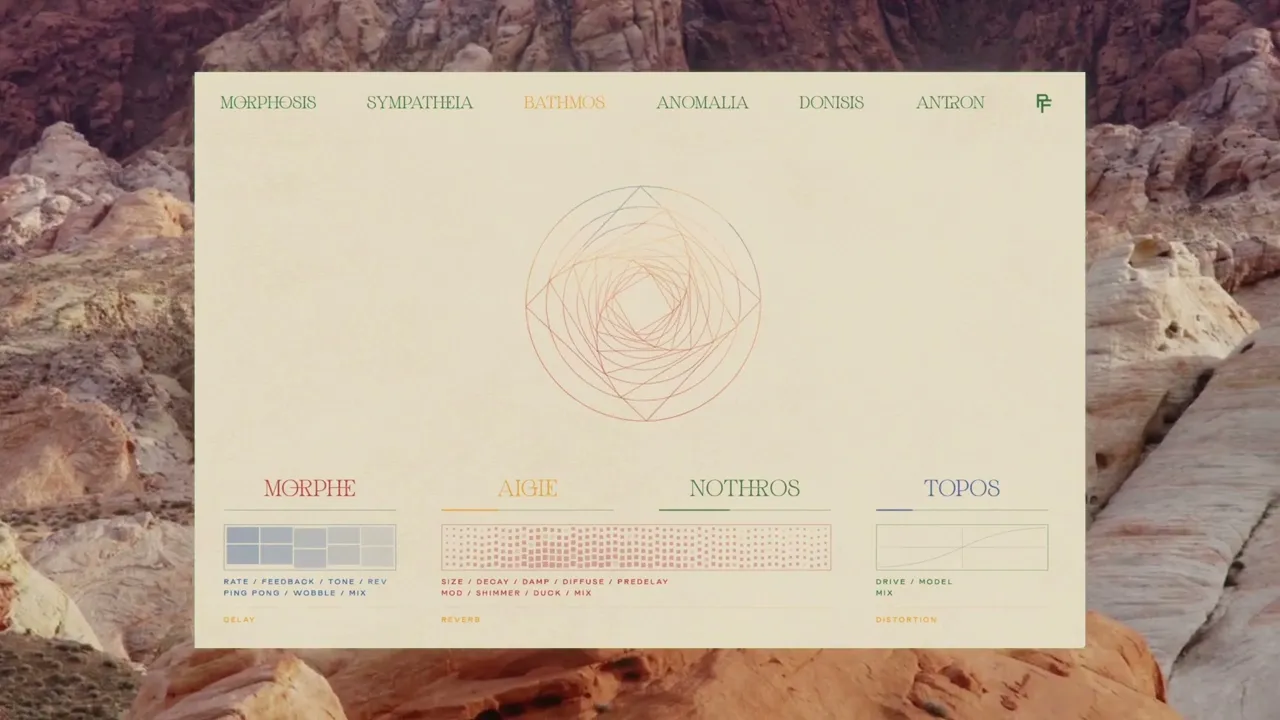
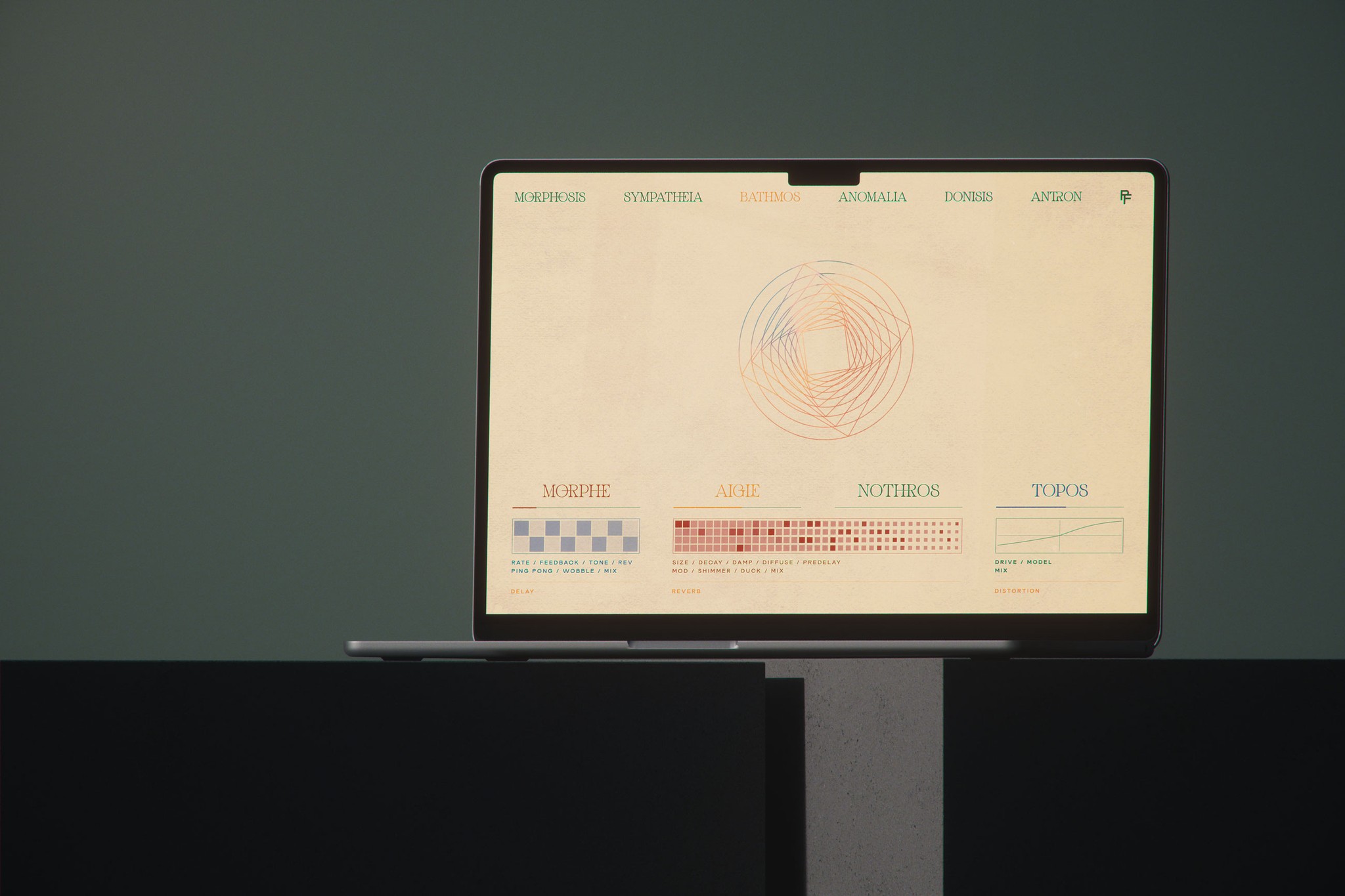
Bathmos
Karplus-Strong string — from wood to metal
A plucked string model with tunable dispersion. Near center, Morphe sounds like a natural string. Push it outward and the partials spread into clangy, bell-like inharmonicity. High settings introduce a stochastic noise into the delay line that gives notes an unpredictable shimmer, like a string that isn't quite behaving.
005
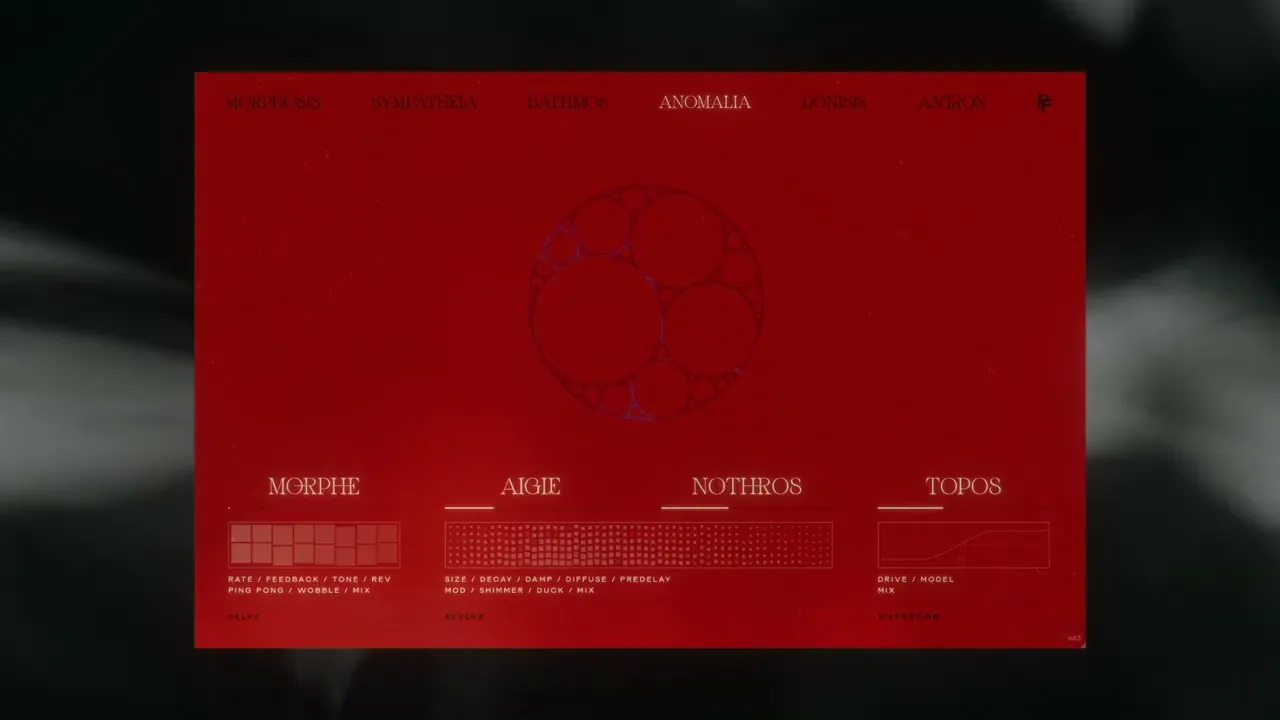
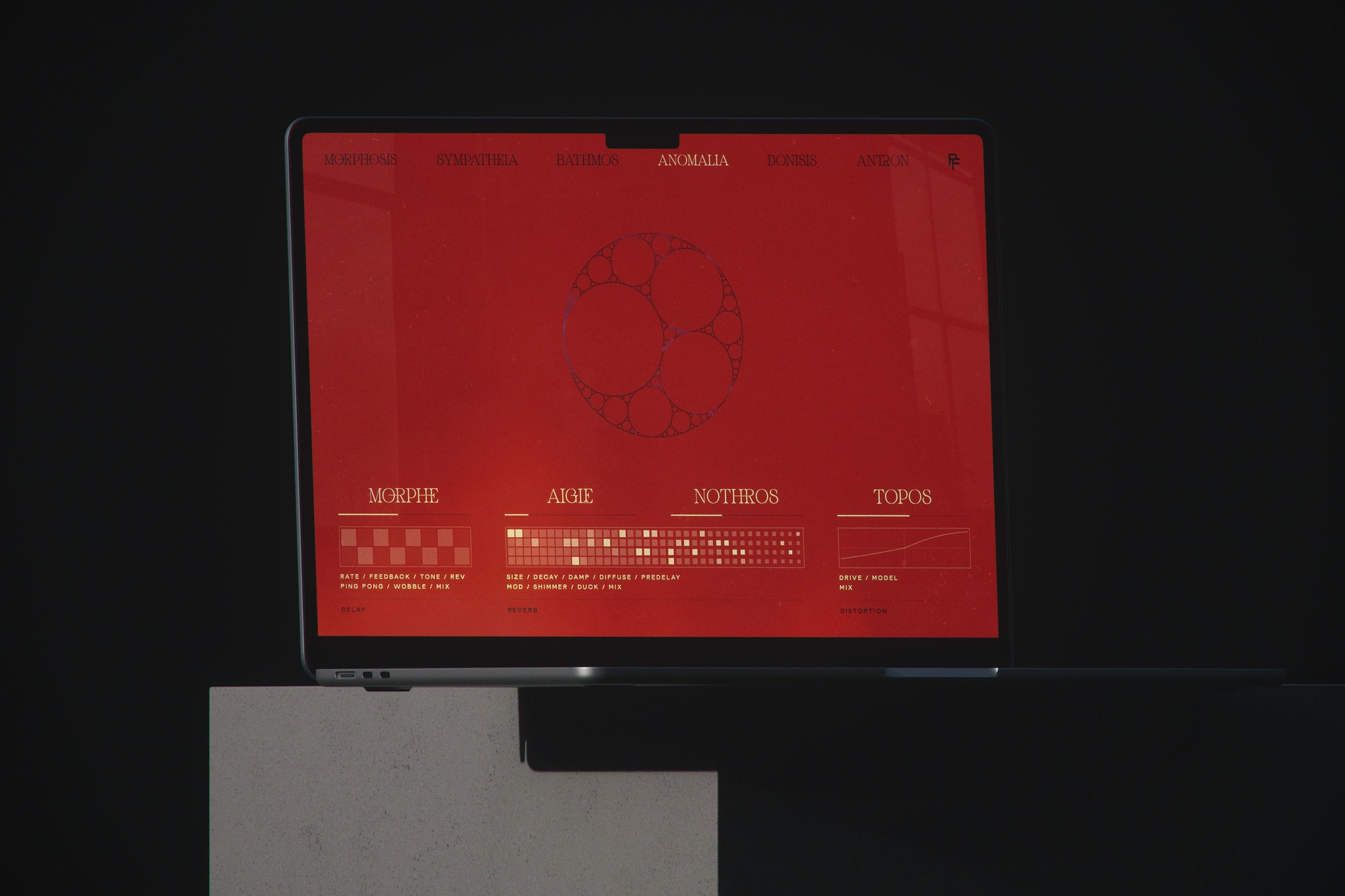
Anomalia
FM voice — ratio walks
FM synthesis inside the resonator. Morphe steps through a quantized table of carrier-to-modulator ratios, moving from clean harmonic intervals through irrational, clanging relationships. Aigle pushes the modulation index — low for pure tones, high for sideband-rich noise. Every Morphe position is a different instrument: marimba, bell, metallophone, something with no name.
005
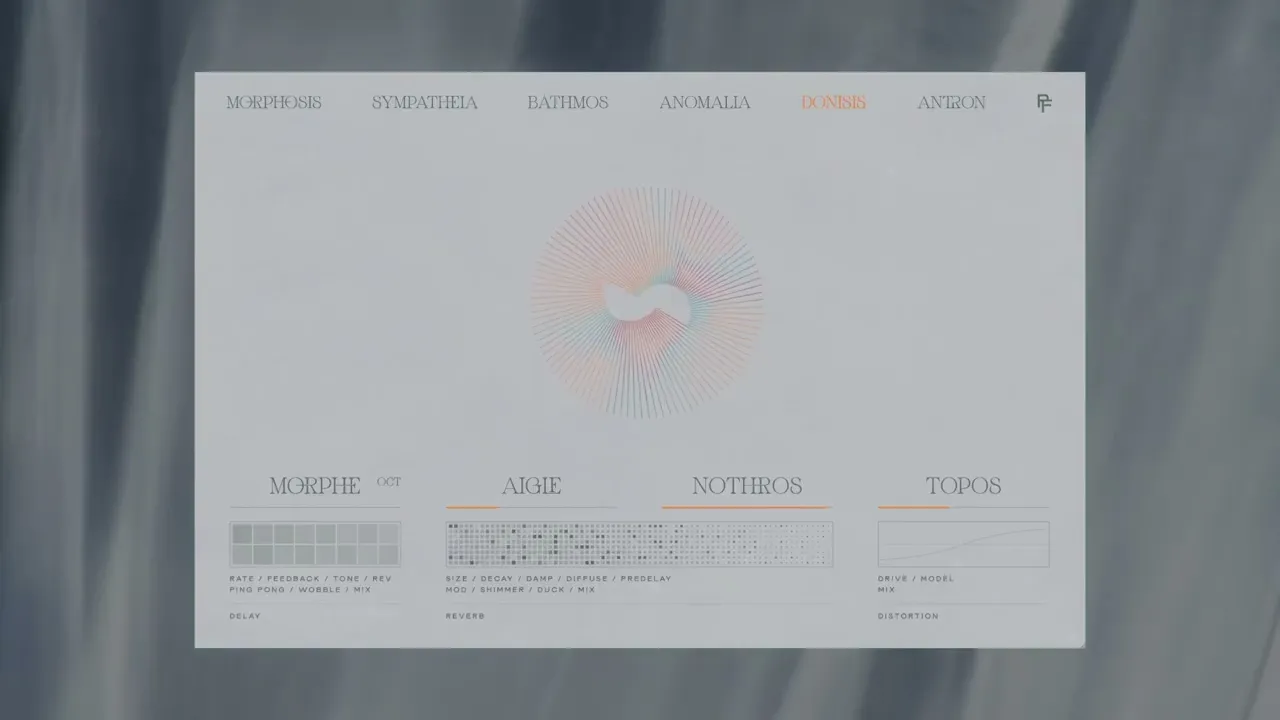
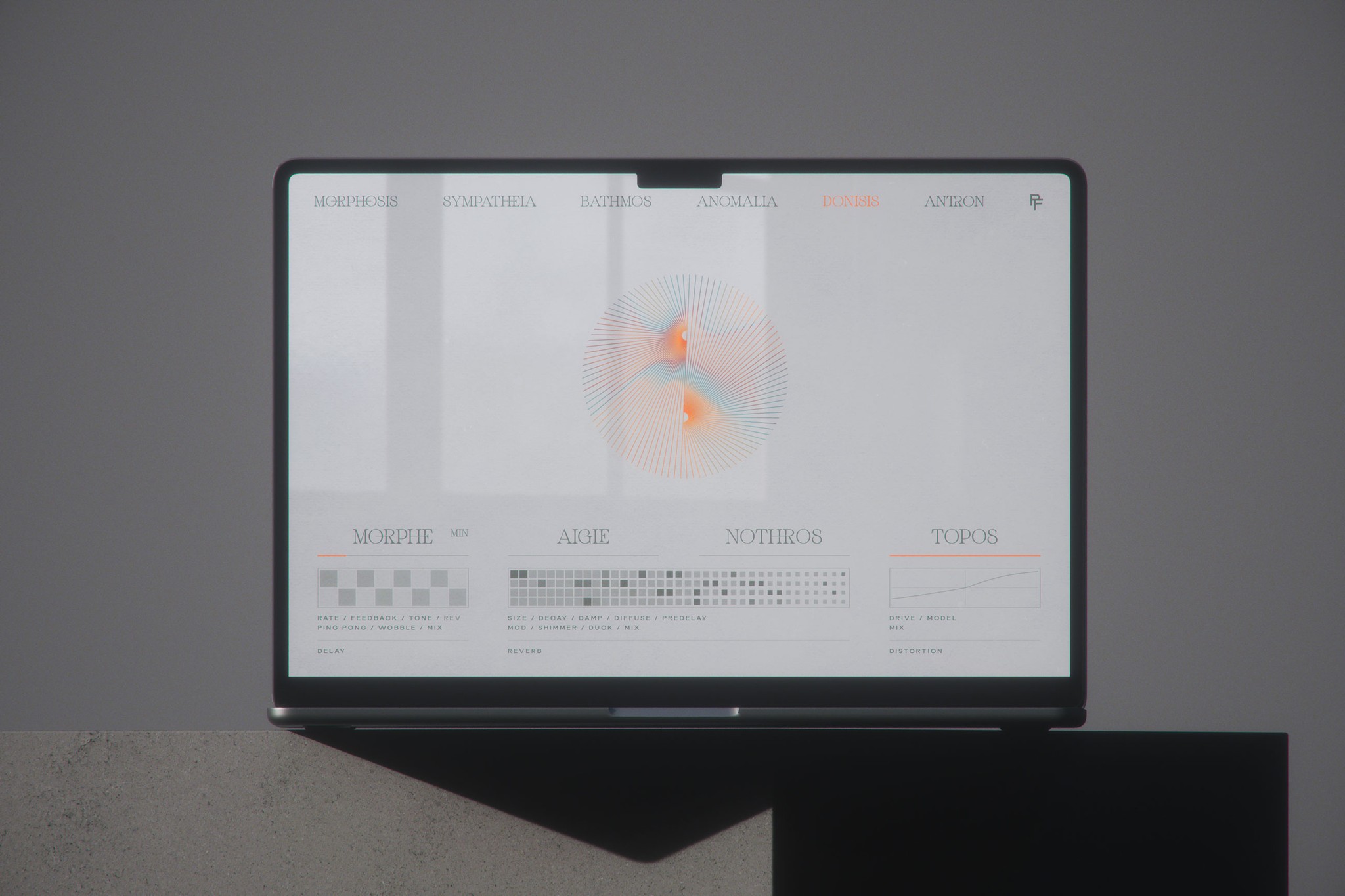
Donisis
Quantized sympathetic strings — chord engine
The sympathetic string model locked to fixed chord shapes. Where Sympatheia glides freely between intervals, Donisis snaps to presets — octave, minor, major, sus4, minor 7th, major 7th, and more. Morphe steps through eleven chord voicings; the current chord name displays beside the knob. Less a texture and more a harmonic tool — play a note, choose the chord it lives inside.
005
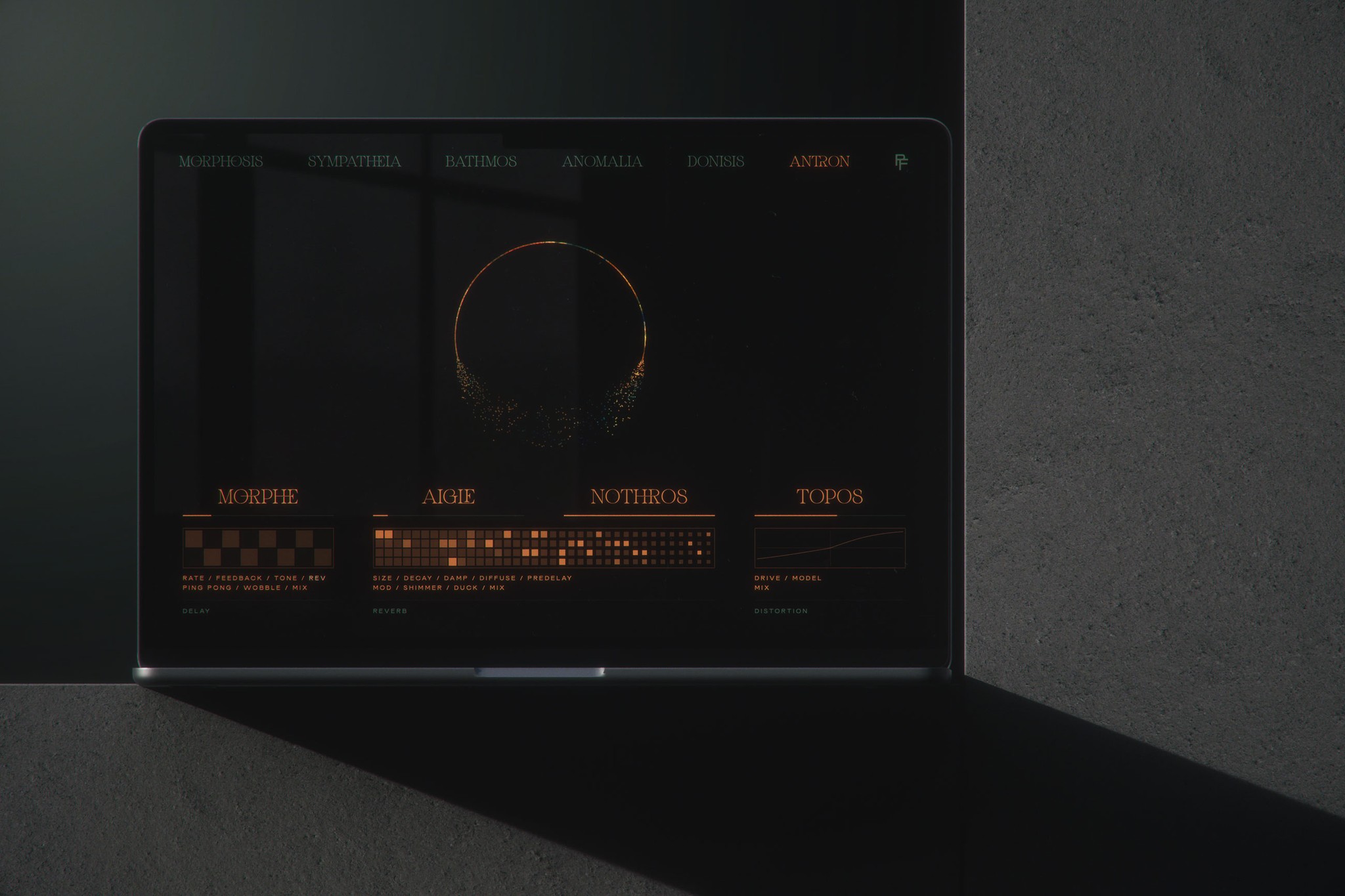
Antron
String and reverb — ambient string
The Karplus-Strong model with an internal reverb baked into the resonator's tail, before the signal reaches Velvet. The result is warmer and more diffuse than Bathmos — notes bloom rather than decay cleanly. Good for pads, atmospheric textures, and anything where the line between instrument and space should blur.

Software
Audio Plugins